Understanding Chord Progressions in Popular Music
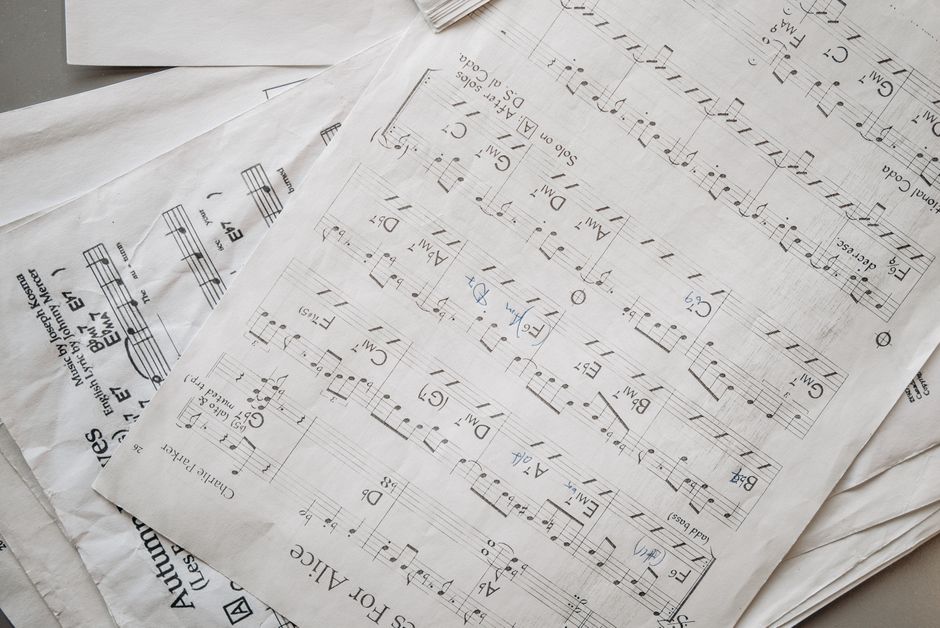
Chord progressions form the harmonic backbone of popular music. They provide a framework for melodies, rhythms, and lyrics, and they help shape the emotional character of a song. Whether you are a beginner or an experienced musician, understanding how progressions work can open up new possibilities for your own compositions. In this guide, we will explore common chord sequences found in rock, pop, and jazz, and discuss practical ways to use them in your music.
At its core, a chord progression is a series of chords played in succession. These sequences are often built on the diatonic scale of a key, using chords that naturally fit together. By learning these patterns, you can create music that feels familiar yet personal. The goal is not to dictate a single correct approach, but to offer a transparent methodology that you can adapt to your creative process.
It is important to note that the effectiveness of any progression depends on multiple factors, including instrumentation, rhythm, melody, and arrangement. No single progression guarantees a particular emotional response; context and execution play significant roles. With that in mind, let us delve into the building blocks of harmony and explore some of the most widely used progressions in popular music.
Fundamentals of Harmony and Chord Construction
Before examining specific progressions, it helps to understand how chords are constructed and how they relate to one another. In Western music, chords are typically built by stacking thirds on top of a root note. The most common chords are triads, which consist of three notes: the root, the third, and the fifth. These triads can be major, minor, diminished, or augmented, each with a distinct sound quality. The diatonic scale of a key contains seven notes, and each note can serve as the root of a chord. The resulting chords are labeled with Roman numerals to indicate their scale degree and quality.
For example, in the key of C major, the diatonic chords are C major (I), D minor (ii), E minor (iii), F major (IV), G major (V), A minor (vi), and B diminished (vii°). This system allows musicians to describe progressions in a key-independent way. When you see a progression like I–V–vi–IV, you can instantly recognize it as a sequence of chords that appears in countless songs across genres. Understanding these Roman numeral relationships is a foundational skill for any composer.
In addition to triads, seventh chords are common in jazz and sometimes in pop and rock. These add a fourth note to the triad, creating richer harmonies. For instance, a G7 chord (V7) in C major contains the notes G, B, D, and F. The added seventh introduces tension that often resolves to the tonic chord. The use of seventh chords and other extensions can add color and sophistication to your progressions, but they are not strictly necessary for creating effective music.
Common Progressions in Rock and Pop
Rock and pop music frequently rely on a handful of chord progressions that have proven to be versatile and emotionally resonant. One of the most ubiquitous is the I–V–vi–IV progression, often referred to as the “four-chord” progression. In the key of C major, this would be C–G–Am–F. This sequence has been used in thousands of songs across decades, from doo-wop to contemporary pop. Its popularity stems from its balanced mix of stability and movement, and it can be played in any key by transposing the chords accordingly.
Another common progression is the vi–IV–I–V, which is essentially the same four chords but starting on the minor sixth chord. In C major, this would be Am–F–C–G. This variation often creates a slightly more melancholic or introspective feel, depending on the arrangement. Many songwriters use this progression to evoke a sense of longing or reflection. The order of chords can significantly influence the emotional contour of a song, even when the same set of chords is used.
Blues-based progressions also feature prominently in rock music. The twelve-bar blues is a classic form that uses the I, IV, and V chords in a specific pattern. In the key of A, the chords would be A, D, and E. This progression is characterized by its repetitive structure and call-and-response phrasing, which has influenced countless rock and roll songs. While the basic form is simple, musicians often add variations, such as quick changes or substitutions, to keep the music fresh.
When using these progressions in your own compositions, consider how the chords interact with the melody and rhythm. The same progression can sound vastly different depending on tempo, instrumentation, and dynamics. Experiment with different voicings and rhythmic patterns to find what works for your song. Remember that progressions are tools, not rules; they provide a starting point for your creative exploration.
Jazz Progressions and Harmonic Sophistication
Jazz music often employs more complex chord progressions that incorporate seventh chords, extensions, and alterations. One of the most fundamental jazz progressions is the ii–V–I, which appears in countless standards. In the key of C major, this would be Dm7–G7–Cmaj7. This sequence creates a strong sense of resolution, as the ii chord leads to the V chord, which in turn resolves to the I chord. The ii–V–I is a cornerstone of jazz harmony and is used in various forms, including major and minor keys.
Another common jazz progression is the I–vi–ii–V turnaround, which is often used to cycle back to the beginning of a tune. In C major, this would be Cmaj7–Am7–Dm7–G7. This progression is sometimes referred to as the “circle progression” because it follows the circle of fifths. The roots of the chords move in descending fifths, creating a smooth and logical harmonic flow. Jazz musicians often improvise over these progressions, using the chords as a guide for melodic invention.
In addition to these, jazz frequently uses modal progressions, where a single chord or mode is extended for several measures. This approach emphasizes texture and color over rapid harmonic movement. For example, a piece might stay on a Dm7 chord for an extended period, allowing soloists to explore the Dorian mode. Modal jazz, popularized by artists like Miles Davis, demonstrates how harmony can be static yet dynamic through rhythmic and melodic variation.
When incorporating jazz progressions into your compositions, it can be helpful to study how the chords function within the key. Understanding tension and resolution, and how to manipulate it, is key to creating compelling jazz-influenced music. While jazz harmony can seem daunting, starting with the ii–V–I and gradually adding extensions is a practical way to build your skills.
Applying Progressions in Your Own Compositions
Using chord progressions in your own music involves both imitation and innovation. A good starting point is to learn common progressions by ear and analyze their structure. Play through them in different keys and experiment with variations in rhythm, voicing, and instrumentation. As you become more comfortable, you can begin to modify these progressions by substituting chords, adding passing chords, or changing the order of chords. For example, replacing a IV chord with a ii chord can alter the emotional tone of a phrase.
Another approach is to combine elements from different genres. You might use a rock progression as the foundation but add jazz extensions to create a hybrid sound. The possibilities are vast, and there are no strict rules that dictate what you must do. What matters is that the progression supports the melody and lyrics, and that it feels right for your artistic vision. Trust your ears and your instincts, and don’t be afraid to break away from conventions.
When writing, consider the overall form of your song. Chord progressions often define sections such as verses, choruses, and bridges. A verse might use a more meandering progression, while a chorus might employ a simpler, more anthemic one. The contrast between sections can add interest and momentum. Additionally, pay attention to how the bass line interacts with the chords; a well-crafted bass line can enhance the harmonic movement and provide a solid foundation.
It is also worth noting that the emotional impact of a progression is highly dependent on context. The same four chords can sound joyful in one song and sorrowful in another, depending on tempo, timbre, and delivery. Therefore, when using progressions, focus on the overall arrangement and how all elements work together. This holistic approach will help you create music that is both engaging and authentic.
Conclusion: A Flexible Framework for Creativity
Chord progressions are a fundamental aspect of popular music, offering a flexible framework for composition. By understanding common sequences in rock, pop, and jazz, you can expand your harmonic vocabulary and enhance your ability to express musical ideas. Remember that progressions are not prescriptive; they are tools that can be adapted to suit your creative needs. The examples discussed here are starting points, and you are encouraged to experiment and develop your own variations.
As you continue to explore, keep in mind that music theory is a means to an end, not an end in itself. The most important thing is to create music that resonates with you and your audience. Whether you are writing a simple pop song or a complex jazz piece, the principles of harmony can guide your choices without limiting your creativity. With practice and curiosity, you can use chord progressions to craft compelling and original compositions.